Watch members’ fields every day, compare instantly after a disaster.
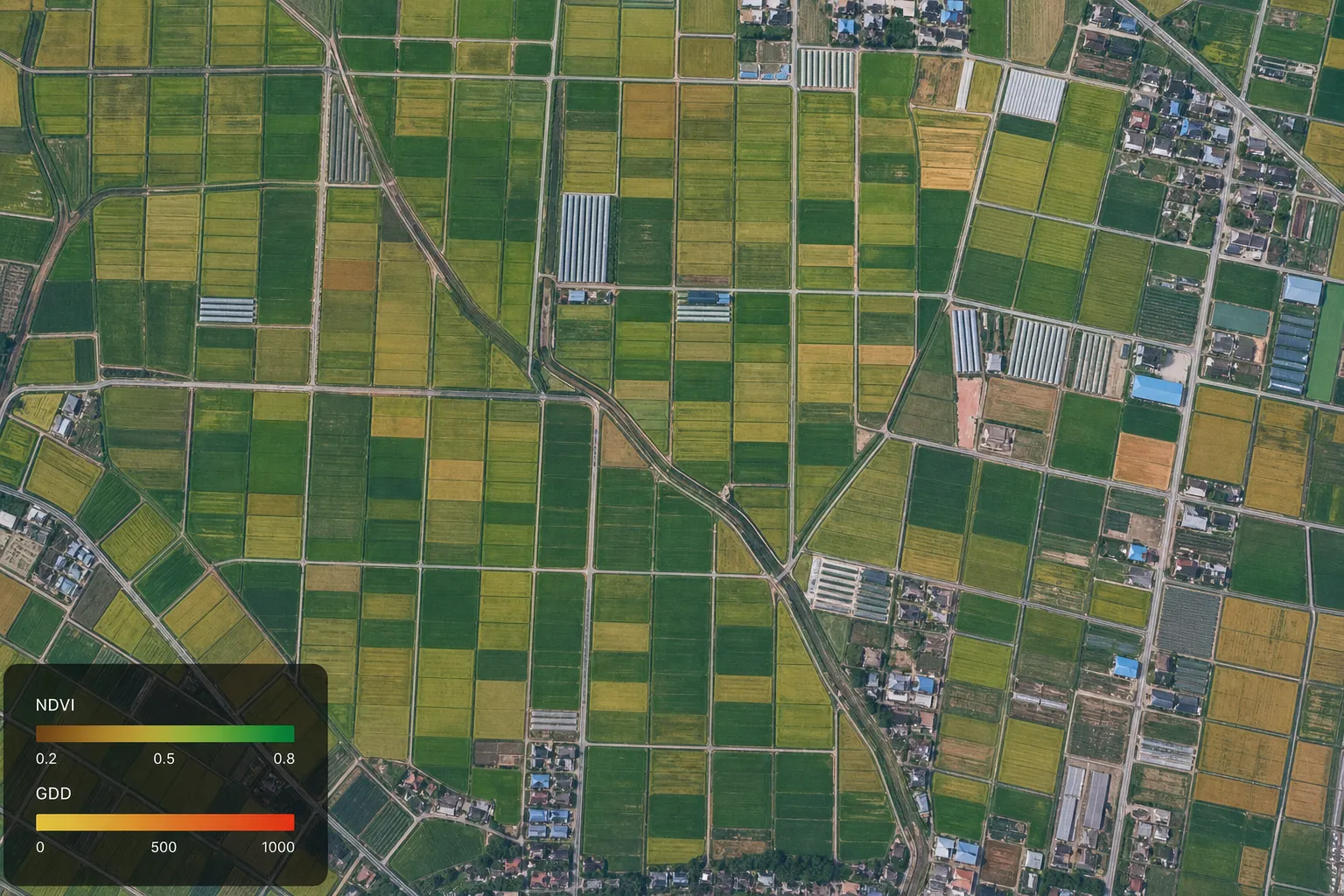
Recording paddy, upland and orchard condition with growth screening makes it clear what changed after a disaster.
In practice
Everyday records become evidence.
240 growth screenings a year keep NDVI, NDMI and growth stage on record, and water stress and growth lag are flagged early.
- Growth stage for paddy, upland and orchard
- Early water-stress and growth-lag warnings
- Monthly growth curve with degree-days and rainfall
- Growth report PDF
Benefits
Members’ fields on one screen.
See registered fields in one place and never miss a field that is due for rescreening.
Early detection
Drought, poor irrigation or heat; flooding, lodging, pests or cold, flagged early.
Records
Per-field growth curves build up for year-on-year comparison.
Disaster response
When disaster strikes, compare against the everyday record at once.
FAQ
Frequently asked questions
Does it predict yield?
No. No yield (t/ha) or shipping dates; it screens growth condition.
Small plots?
The 10 m grid suits large paddy blocks and is weaker on small plots. We test on your fields first.
How many screenings?
240 growth screenings a year are included; field boundary detection shares the same quota.
TERRASENSE is a satellite first screening of suspected damage. It does not replace the crop-insurance loss assessment: the loss rate and indemnity are confirmed by a certified loss assessor in the field.
Related pages
Work with us
See your county’s fields from orbit, before the next storm.
We start with a satellite screening of your area from public data, then compare the results with your own field survey records. No equipment goes in the field.